Is it easier to buy a product off the shelf or build the proverbial better mouse trap (I guess that is more figurative and less proverbial, but proverbial sounds so smart. I guess using it incorrectly is actually pretty #55 of me)? Always easier to take something off the shelf.
That is the problem with things off a shelf...they lack risk and therefore often lack substance. The stuff is just good enough. From entrepreneurs to artists, progress was never achieved by settling for good enough. Progress was also rarely achieved by creating red tape and rules for creativity.
Back to the tee-ballers. Should a parent go to the trophy shop and buy a kid a trophy without trying? No. Where does a trophy come from? Trying and succeeding in completion of the process (not necessarily winning).
Entrepreneurs are told to stop before they fully finish. Seems like the community (at least a small, vocal subset) have a crystal ball and can predict the demise of the entrepreneur.
Well, now it is happening with public art in Fresno. Iron Bird Lofts have the gargoyles and Neighborhood Thrift has its mural. The gargoyles are going to bring the demons to the downtown area and the mural in the Tower is going to cause home prices to plummet (forget the impact poor credit decisions, unqualified home ownership and greed have had on the plummeting home prices). Unfounded claims by a FEW (even a handful) get the attention and detract from the mission or larger picture.
This breaks my heart. Let artists finish. Let the art sink in. Try, please try, to understand it. Be comfortable with not understanding it. It does not mean you are dumb (well, maybe you are). Do not catastrophize the outcome of "tasteless art."
I would like to share with you five numbers: 40, 30, 12, 10, 8
- 40% of the things we worry about NEVER happen. That means we spend time fretting about nonessential matters.
- 30% of the things we worry are issues of the past. We cannot change or control the past. Yet we still allow that to reside in our minds.
- 12% of the things we worry about are things people say about us. In general, we these are not people who are in our inner circle. We care more about what they said than the person who said it. Whoa, criticism from someone who does not matter...
- 10% of the things we worry about turn out okay. This will be bad...oh, it wasn't that bad after. Naturally we attribute the positive outcome to luck, right?
- 8% of the things we worry about suck balls. Yep, the outcome is bad and not happy.
So here is my advice to those in the community with the all-knowing crystal balls: Look in the crystal ball to see if what you are worried about is part of the 8% or 92%...odds are it's not as bad as you imagine.


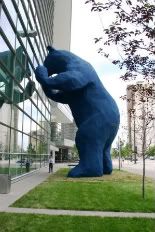
 This leads to an asset-based view of public art. If a new building allocated one percent of the total budget toward the installation of public art on or around the property, the community would be aesthetically changed. Suddenly a ten million dollar project would include a $100,000 art installation. This could cause commercial building to become destinations or points of interest. The community would have a collection of assets.